

Blog Highlights
See how artists and creators are taking over these little spaces in a big way with their art. Creative interventions are making the vertical commute more interesting than ever before.

Step into the elevators at Stockholm’s newly opened Stadshotell and you’re greeted not by stainless steel, but by luminous intarsia panels crafted by artist Klara Knutsson. Roses bloom in wood grain, cranes tilt above rooftops, and Stockholm’s skyline unfolds in marquetry transforming a silent cab ride into a moment of theatre. In a hotel defined by understated craft and minimalism, these elevators remind us that even the most everyday journey can carry the weight of culture and story.

Le Dokhan's, Paris Arc de Triomphe is a luxury hotel located close to the iconic Arc de Triomphe. Guest rooms, restaurant, bar, fitness center and exceptional service are offered but what makes this hotel truly unique is its elevator cab, made from a vintage Louis Vuitton steamer trunk, adding luxury and nostalgia to guest experience. Perfect choice for luxury travelers visiting Paris.
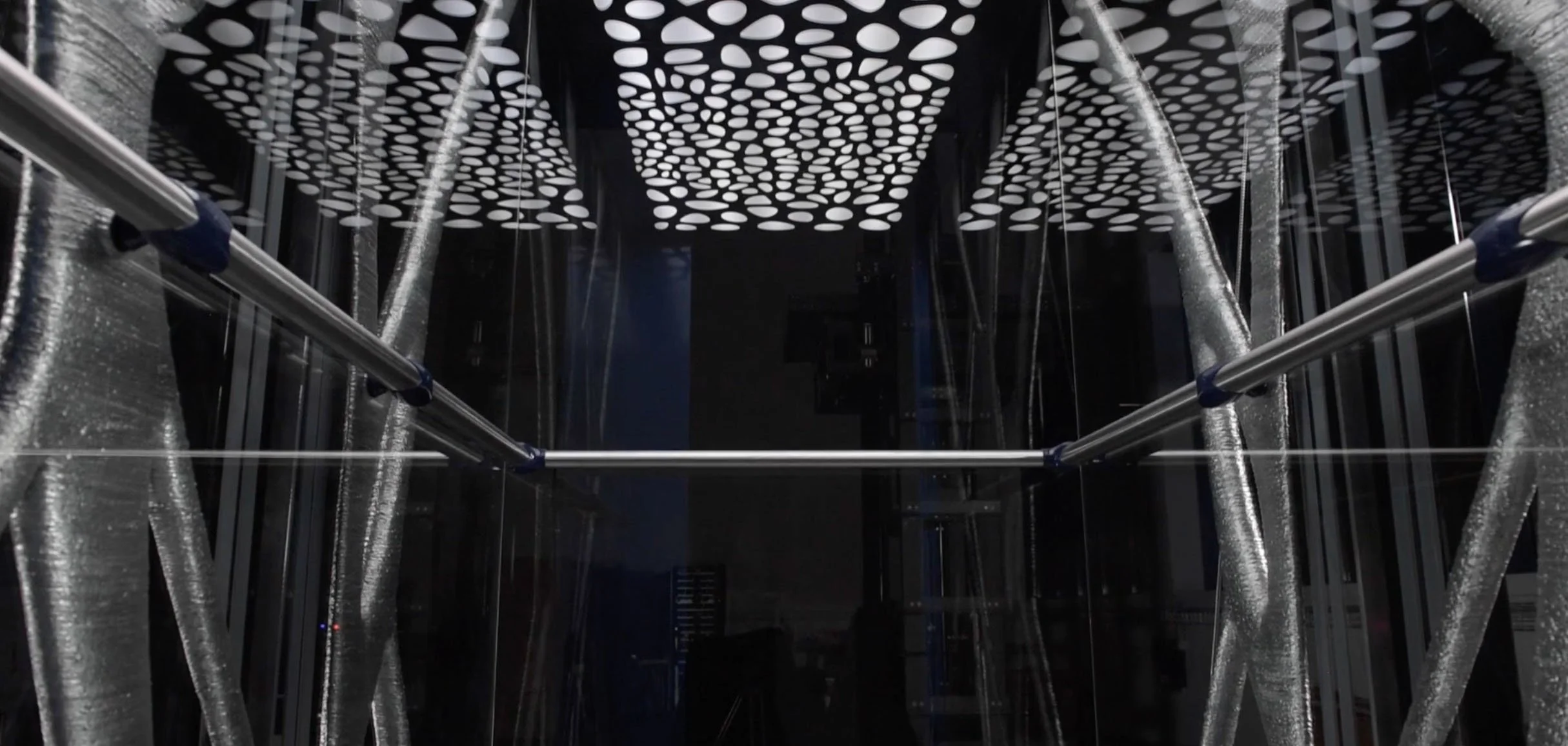
In the joint project with MX3D, Schindler elevator car has designed a 3D printed elevator cab that looks like a filigree leafless branches. A design that can only be produced using 3D printing. In addition to aesthetics, however, the project is also dedicated to topology optimization, which aims to achieve the best possible design. “Essentially, you look at an object and lots of it is superfluous material”
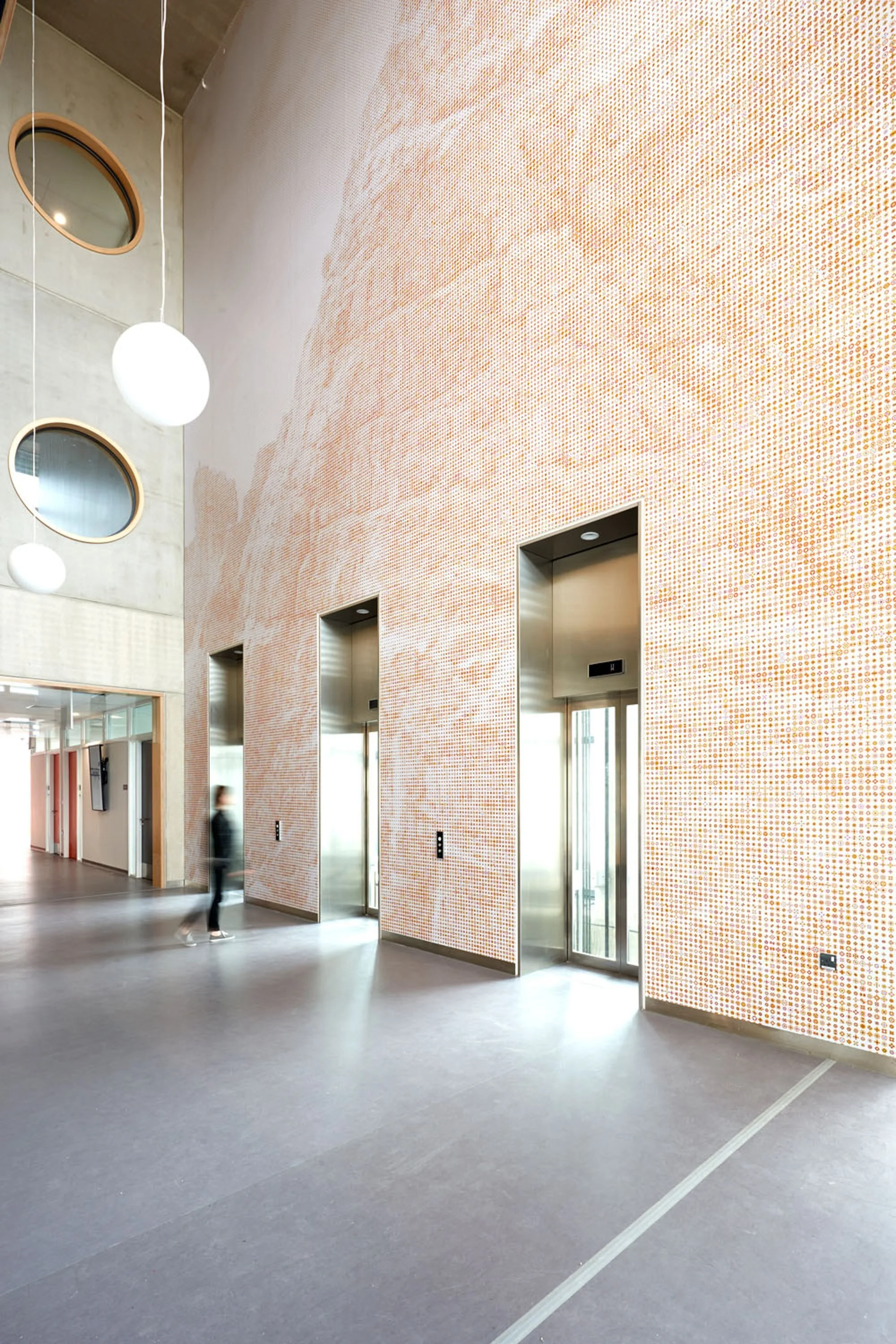
Pentagram has teamed up with placemaking agency Futurecity and renowned graphic artist Karel Martens to create a permanent installation at the newly opened Cancer Centre at Guy’s and St Thomas’ Hospital. The piece is one of five major art commissions in the centre, which was designed by Rogers Stirk Harbour + Partners.
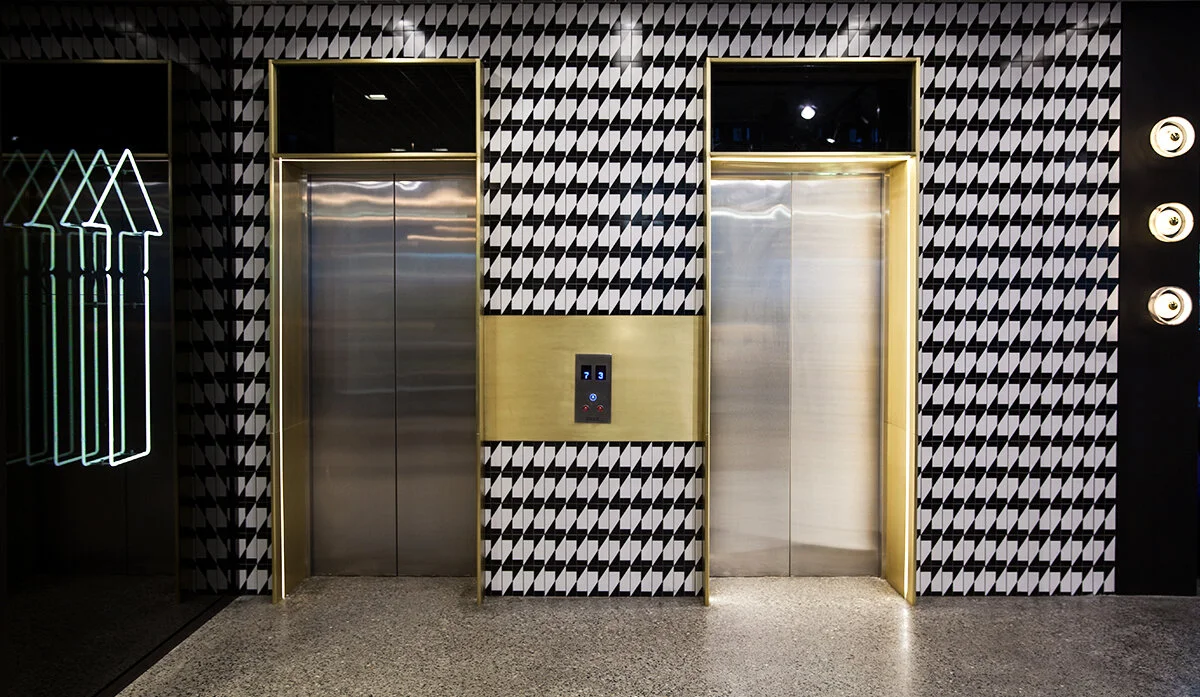
This innovative modular hotel was manufactured entirely offshore and shipped to its home site in West Perth, a process that significantly reduced the cost of construction. Where the developer hasn’t skimped is interior design, recruiting TWA to create an ‘edited luxury experience’ that’s part social destination, part gallery space and every inch a sophisticated sanctuary for the urban aesthete.

Harry Nuriev still remembers his first ride in an elevator. He was a teenager. “While growing up in low-income projects in Russia, elevators were not very commonplace,” he explains. He has since been in many other elevators all over the world, but his latest project, The Elevator, a retrofuturistic installation he unveils today at the 15th edition of the design fair Design Miami/Basel, is inspired by a lift’s speed and its quality as a room that is constantly in motion. It also continues his fascination with the metallic, the monochrome, and the mid-century Italian modernism that has been typical of his firm Crosby Studios’ well-received work.

WIPdesign has created and built the lobby and the monumental elevator of the Maison Moët & Chandon at Epernay. Moët & Chandon, also known simply as Moët, is a French fine winery and co-owner of the luxury goods company LVMH Moët Hennessy Louis Vuitton SE. Moët et Chandon is one of the world's largest champagne producers and a prominent champagne house.

Architects and designers wanted to create a modern style better suited for the modern mechanical and industrial age marking. Art Deco celebrated movement and motion developed from what people saw as the aesthetics of the machine age. It was sleek and sophisticated, featuring smooth surfaces and bold colours in high contrasts like black and white.

Japans rich history of craft and design dates back ever since humans settled on its islands. Traditionally artisans and trained workers used natural materials to craft functional objects. These objects were created to be used, but also to be displayed, a blurring of form and function which continues to be emphasized throughout Japan today.
READ MORE
Pentagram has teamed up with placemaking agency Futurecity and renowned graphic artist Karel Martens to create a permanent installation at the newly opened Cancer Centre at Guy’s and St Thomas’ Hospital. The piece is one of five major art commissions in the centre, which was designed by Rogers Stirk Harbour + Partners.

Elevator design is not something many people think of. Even professional architects, urban planners and designers overlook their significance to modern buildings and cities as a whole. Over the past decade our team of vertical transportation specialists has worked to elevate the narrative around these little spaces in a big way.

The 'CHANGE' elevator intervention, envisioned by designers Kristine Matthews and Karen Cheng, both on the faculty at the University of Washington resulted in a unique collaboration between art and business—two distinctly contrasting disciplines. The result, a custom elevator installation that allow riders to reflect upon the dynamic relationship between business and change.

A Belgian warehouse elevator get's a graphic makeover by illustrator Darrin Umboh. A member of the Dutch artist agency Shop Around, his work explores traditional graffiti styles with contemporary illustration for an instantly recognizable effect.

The Balfour Building is one of Toronto's lasting piece of Art Deco architecture owned and maintained by WTF Group. Their dedication to preservation and heritage inspired this custom wall graphic recreating the architectural elevations by Jewish Architect Benjamin Brown.

The 5 storey Dominion Public Building was built between 1926 to 1935 for the government of Canada at southeast corner of Front and Bay street, Toronto.

Adobe graphics and branding were applied to the elevator lobby. The building is full of different companies, now when you arrive on the Adobe floor, you are welcomed with bold graphics! While graphic design is not new in the elevator industry, companies are beginning to leverage the unique and valuable space in and around elevators to better brand their physical environment.
Step into the elevators at Stockholm’s newly opened Stadshotell and you’re greeted not by stainless steel, but by luminous intarsia panels crafted by artist Klara Knutsson. Roses bloom in wood grain, cranes tilt above rooftops, and Stockholm’s skyline unfolds in marquetry transforming a silent cab ride into a moment of theatre. In a hotel defined by understated craft and minimalism, these elevators remind us that even the most everyday journey can carry the weight of culture and story.
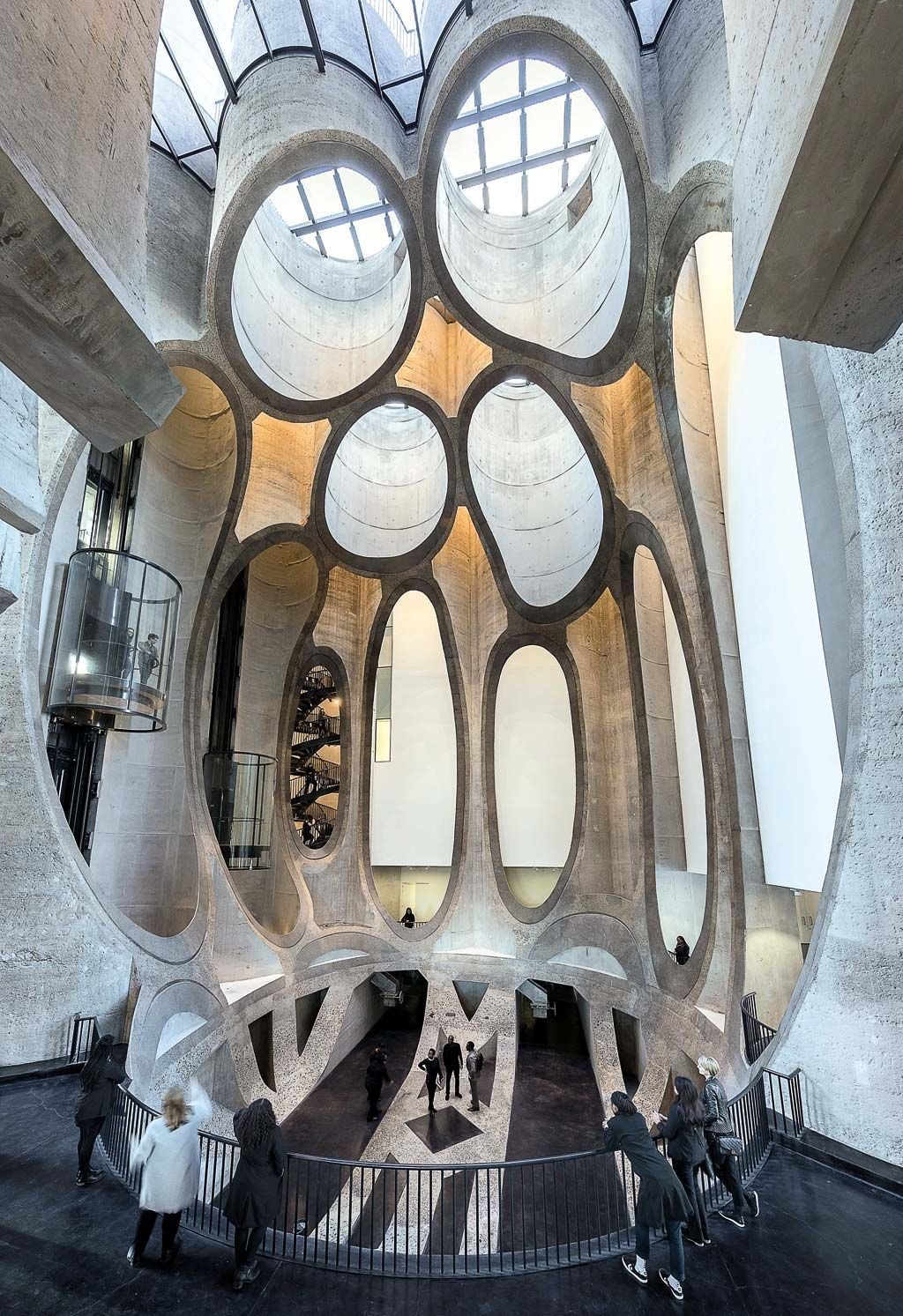
Experience the magic of the Museum of Contemporary Art Africa (MOCAA) elevators by Heatherwick Studio. These custom glass elevators celebrate the historic silos, reinventing the vertical journey. With transparency and interplay of light, they offer captivating views and a revitalized museum visit. Discover how Heatherwick's innovative design creates a transcendent experience, merging art and architecture in a mesmerizing way. Step into the MOCAA elevators and be transported to a world where history and modernity seamlessly intertwine.

Louis Vuitton's Fall/Winter 2011 runway show featured vintage elevators as the backdrop, paying homage to the brand's roots in luxury luggage and the grand era of travel. The elevators were 19th century wrought iron birdcage elevators, with an elegant and exclusive atmosphere.
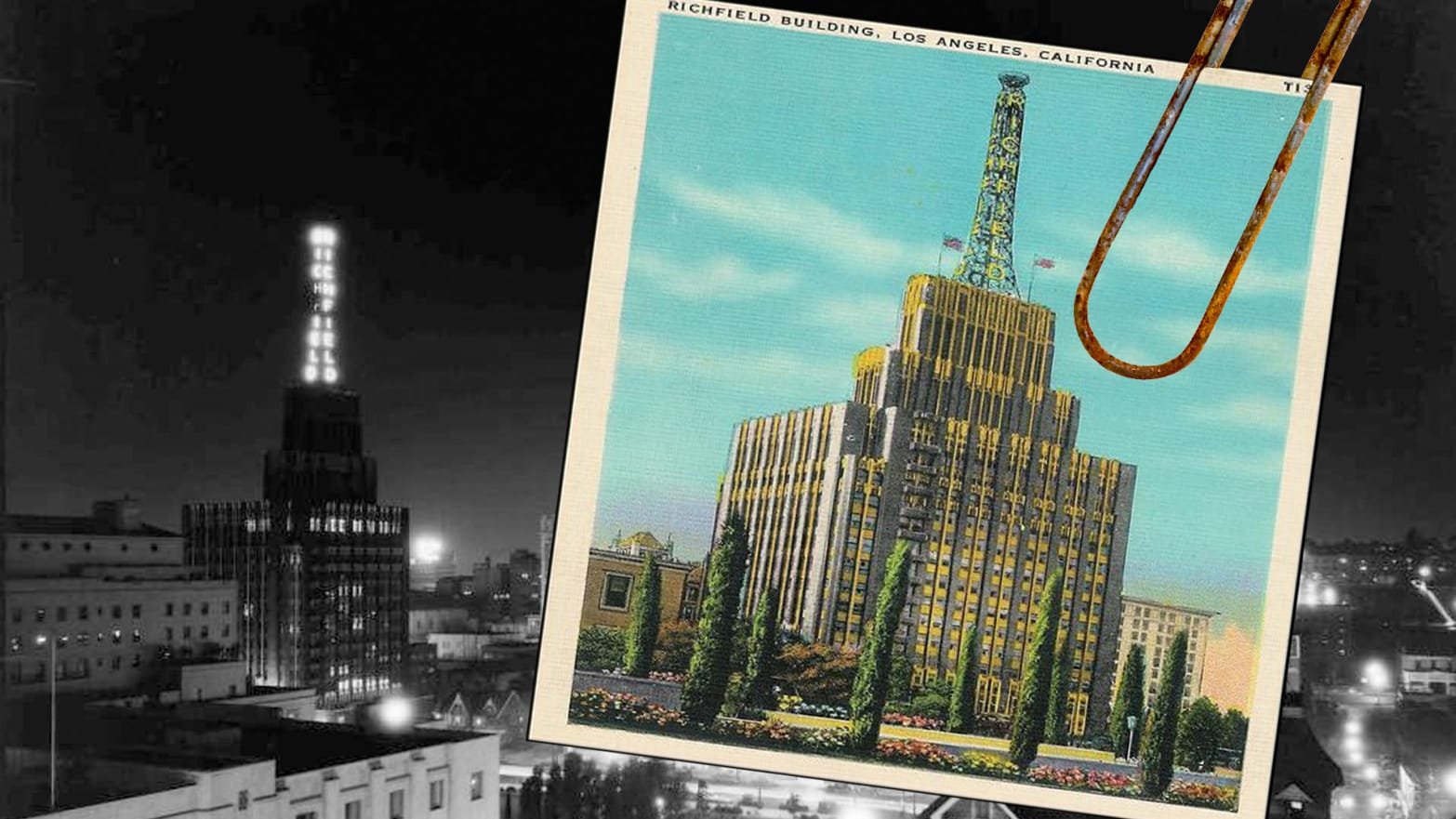
The Richfield Tower is a prime example of a 1920s Art Deco building located in the heart of downtown Los Angeles. The building, which served as the headquarters for the Richfield Oil Company, is known for its intricate details and opulent design. Recently, archive photos and records were discovered that provide a glimpse into the luxurious design of the building's elevators.

Frank Lloyd Wright's design for Crystal City was a visionary concept for a vertical city, comprising of interconnected skyscrapers and underground spaces. The renderings of this unbuilt project, brought to life by architect David Romero, show a complex of interconnected buildings that would have risen high above the city, connected by a network of elevators and internal highways.
Le Dokhan's, Paris Arc de Triomphe is a luxury hotel located close to the iconic Arc de Triomphe. Guest rooms, restaurant, bar, fitness center and exceptional service are offered but what makes this hotel truly unique is its elevator cab, made from a vintage Louis Vuitton steamer trunk, adding luxury and nostalgia to guest experience. Perfect choice for luxury travelers visiting Paris.

Elevators are an essential component of modern buildings and designing an elevator cab interior involves a combination of functionality, safety, and aesthetics. From defining the purpose of the elevator to choosing materials and colors, lighting, adding safety features, wayfinding, branding, and considering the overall aesthetic. It's important to test and evaluate the design, regular maintenance and attention to details.

Elevator rides at Disney World and Disneyland are a type of theme park attraction that involve passengers riding in an elevator-style vehicle to a specific destination, often with a theme or storyline incorporated into the ride experience. These attractions can range in intensity and thrill level, and may be suitable for riders of all ages or may have height or age restrictions.
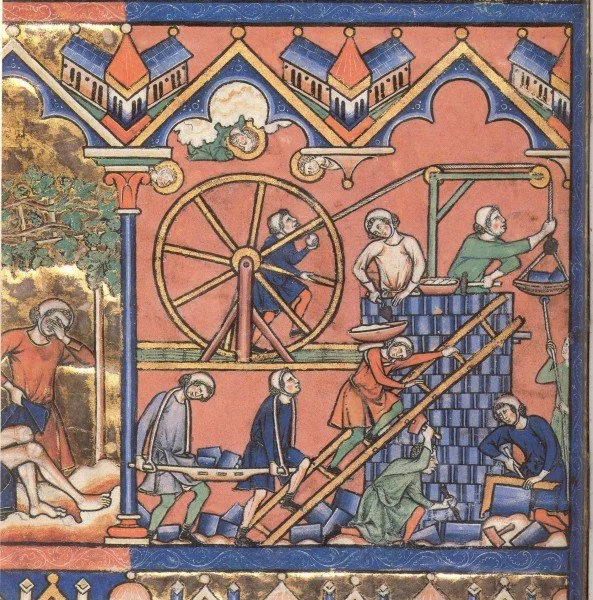
Ancient elevators such as Archimedes' typically consisted of a wooden platform or box drawn by hemp ropes through a vertical open shaft and powered by men or animals operating a capstan. These devices were used primarily to lift heavy loads such as water or building materials.

Alex Begin of Bloomfield Hills, Michigan loved visiting the downtown J.L. Hudson store in Detroit as a child with his parents. The highlight for him was the over 50 elevators that serviced the 33 levels located on Woodward Avenue. Begin loved watching the elevator operators delivering patrons to their desired floors.
Louis Vuitton's Fall/Winter 2011 runway show featured vintage elevators as the backdrop, paying homage to the brand's roots in luxury luggage and the grand era of travel. The elevators were 19th century wrought iron birdcage elevators, with an elegant and exclusive atmosphere.